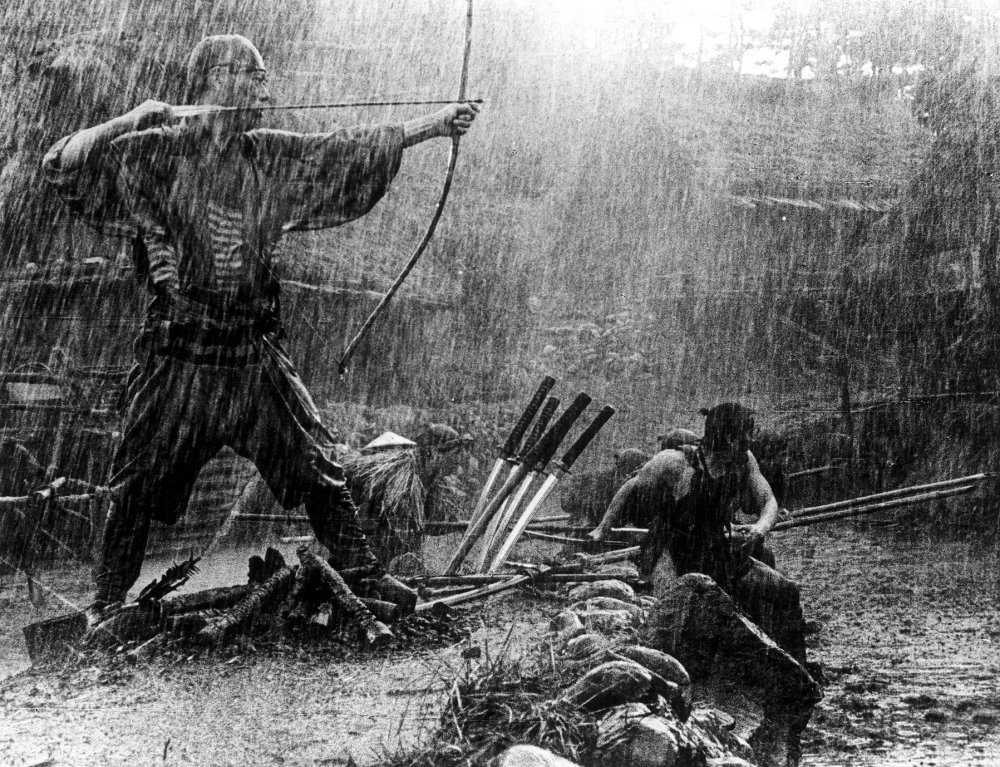
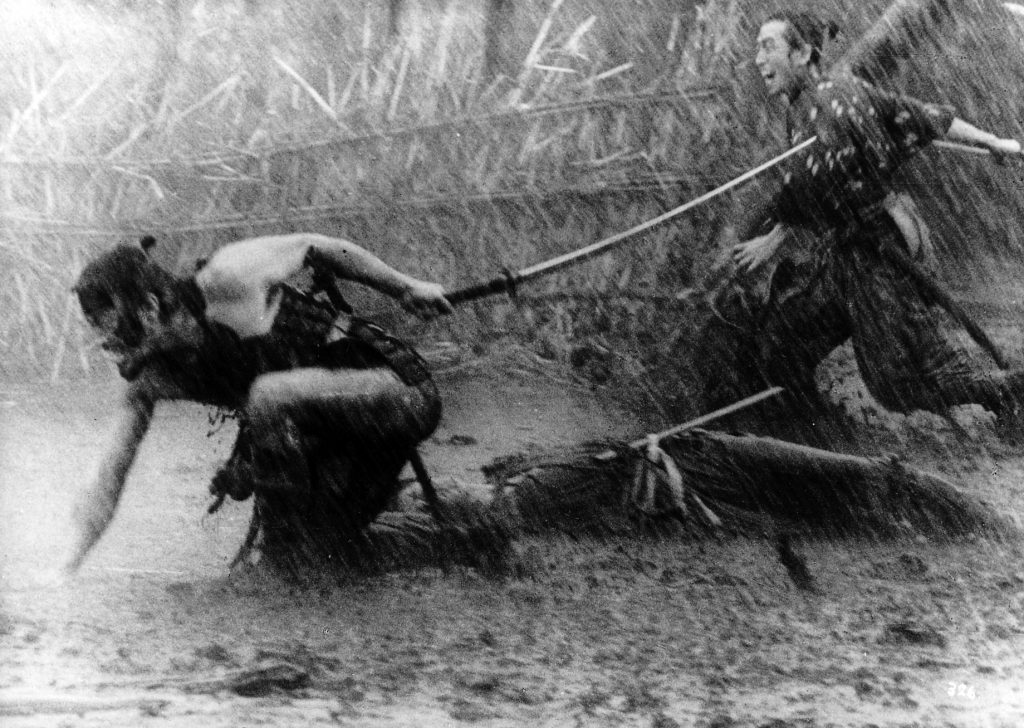
Kurosawa Akira’s Seven Samurai is a timeless masterpiece that has been widely recognized as the greatest foreign-language film ever made. The plot concerns a humble village hiring a band of samurai and protecting itself from pillage in war-ravaged sixteenth-century Japan. Since the wretchedness inflicted on the peasantry is evocative of all forms of human suffering, the honorable service conducted by the seven samurai takes on universal significance.
What it takes to be a trustworthy samurai is the central question that film viewers are encouraged to ponder as the story unfolds. Samurai identity is so fluid as to be reframed and redefined throughout the film. This dynamic of exclusivity and inclusivity forms the core of Kurosawa’s storytelling. Depicted with immaculate realism, magnetic personality traits attract people to the seven and awaken their inner samurai. Not surprisingly, samurai recruitment alone occupies nearly the first one-third of the film.
Despite its daunting length, Seven Samurai is a remarkably fast-paced movie—a series of picture-perfect visuals that manifest Kurosawa’s unyielding devotion to its story and characters.
https://www.asianstudies.org/publications/eaa/archives/the-essentials-seven-samurai/
The visual language of the film is made up of carefully composed frames, and its use of chiaroscuro help to add to the emotional and dramatic nature of the film.